
Madeira without a car: a thoughtful first-visit guide
An Atlantic island of steep landscapes and slower discoveries. Choose your base and transport before filling the itinerary.
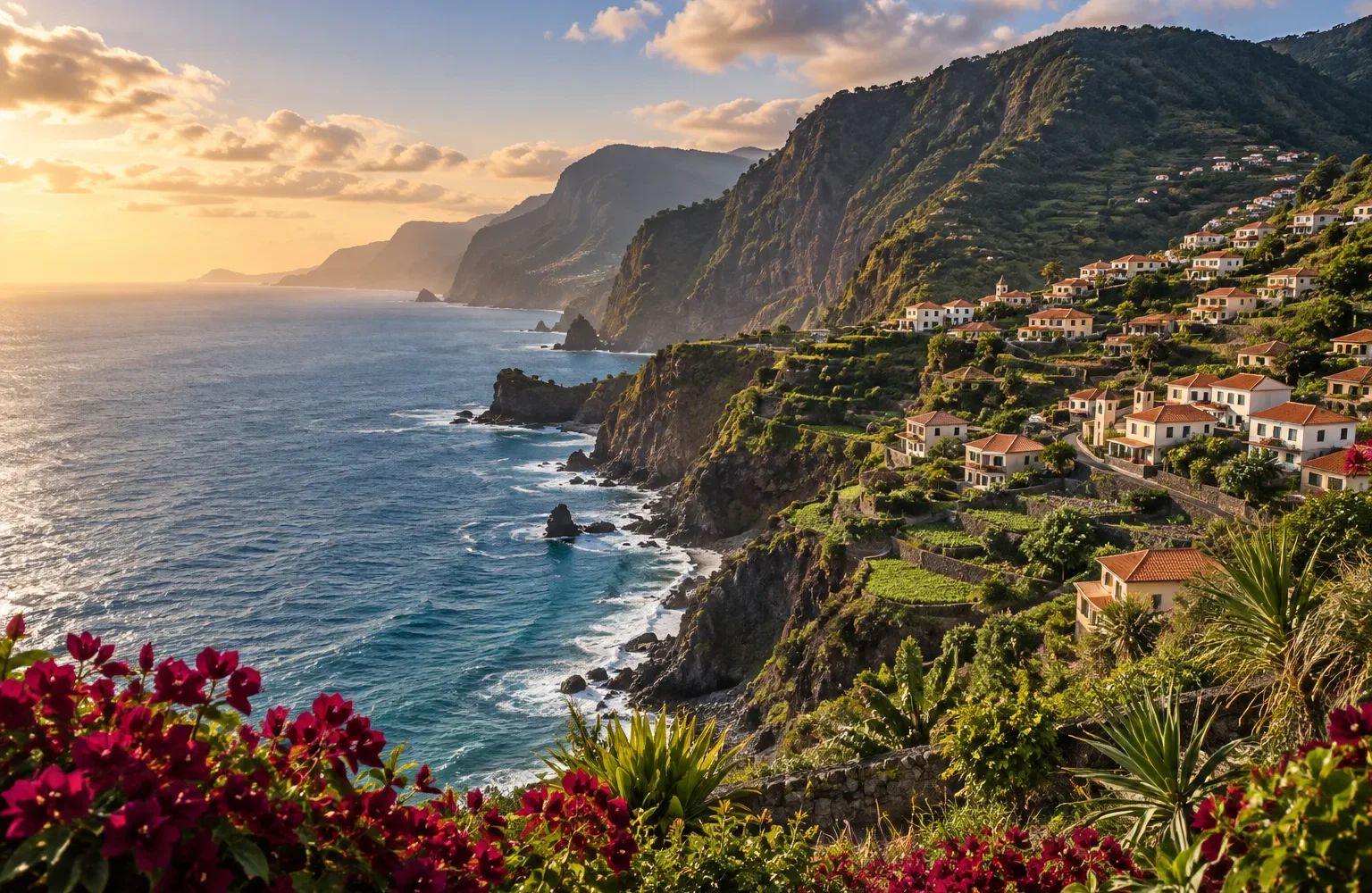
You can plan a visit to Madeira without hiring a car, but it helps to design the trip around transport rather than add transport after choosing every stop. A relaxed urban day, a coastal excursion and a mountain walk involve different logistics. Treat them as different kinds of day instead of assuming one transport solution serves them all.
This is a researched planning guide, not a report of a personal visit. The featured image is a conceptual illustration. Check current services, fares and access arrangements with the operators and official tourism resources before booking.
Choose a base for the trips you actually want
For a first visit, investigate accommodation in Funchal as a potential base and compare its access to the activities you have selected. Do not assume every address described as central is equally convenient. Look at the route to transport stops, the gradient, luggage access and the distance to everyday services.
Ask the accommodation provider for the exact arrival arrangement and check it against a map and current transport information. If hills or steps affect your mobility, obtain specific details about the property and route. “Walkable” is too subjective to be a useful accessibility promise.
Use the official transport directory as a starting point
Visit Madeira’s transport directory lists options including buses, taxis and transfers. Use it to identify the appropriate provider, then check the actual route and date with that provider. A directory entry does not establish that a service reaches your chosen trailhead or runs at a time that suits your return.
For every excursion, record the outbound and return arrangements together. Check where you board, how tickets work, whether the timetable differs by day and what happens if you miss the intended return. Screenshots can be useful offline, but recheck details close to departure.
Think in three kinds of day
| Day type | Planning focus | Useful fallback |
|---|---|---|
| Urban day | Routes, gradients and opening times | A shorter neighbourhood visit |
| Coastal excursion | Return transport and time at the destination | A closer stop served by the same provider |
| Mountain or trail day | Access, weather, permissions and pickup | A different permitted activity or a rest day |
This framework is an editorial suggestion, not a fixed itinerary. It lets you mix ordinary discovery with a few more demanding outings. Leave an uncommitted day so a weather-dependent activity can move without forcing the rest of the trip to change.
Plan walks separately from general sightseeing
A trail can have an end point far from its start, limited mobile coverage or conditions unlike those near your accommodation. Verify its status, difficulty, access and return logistics through official resources. Choose a walk appropriate to the group, not simply the one with the most striking photograph.
Visit Madeira’s current hiking guidance states that classified PR routes require advance time reservations through SIMplifica and directs visitors to check route status. The exact arrangements, charges and available routes can change. Confirm them for the day you intend to walk; do not use this article as an access permit.
Respect closures and official instructions. If you use a transfer, ask what happens if conditions prevent the walk, where the pickup occurs and how to contact the provider. A booked vehicle does not make a closed route safe or open.
Compare the total transport cost
A no-car trip can include public transport for some days and a paid transfer or guided outing for others. Compare the combination you need with the full cost of other options, including the time and effort involved. Do not assume that avoiding a hire car is always the cheapest choice.
Keep prices in euros in your working plan and note when they were checked. Separate per-person costs from per-vehicle costs. If several people travel together, that distinction can change the comparison substantially. Our currency-cost explainer is useful when evaluating payments from another currency.
A first-visit rhythm
Use arrival day to understand your base and verify the next day’s transport. Follow it with an urban day, then one carefully planned excursion. Place a weather-dependent outing later in the visit while leaving a backup day. Finish with a low-pressure day that does not put a long return journey against your flight.
This rhythm is deliberately flexible. It leaves room for food, reading, looking at buildings and simply being in a place. It also prevents a transport disruption from turning every day into a recovery exercise.
Before you book
- Confirm the exact accommodation location and arrival route.
- Check operator schedules for your travel dates.
- Match every outward trip with a realistic return.
- Verify official route access and weather guidance.
- Understand cancellation terms for transfers and tours.
- Keep essential references available offline.
For broader journey planning, see our European rail guide. For staying longer, use a household budget framework rather than treating holiday spending as a cost-of-living estimate.
Official resources
Visit Madeira: means of transportation; Visit Madeira: hiking. Checked 6 October 2026. This guide does not quote live timetables, trail availability or prices.

Daniel Ross
Daniel Ross is an editorial pen name for Experience International’s travel and destination coverage. The profile centres on journeys that benefit from thoughtful planning: rail connections, transport choices, useful bases and itineraries that leave room to enjoy a place. Guides distinguish researched information from illustrative suggestions and link to operators or official destination resources when arrangements can change. They do not imply that the writer has personally stayed at a hotel, tested a tour or visited every location described. Daniel is a disclosed editorial persona represented by an illustration. No travel-industry qualifications, awards or previous journalism appointments are claimed.
Related perspectives
More in Destinations ↗
How to build a realistic cost-of-living budget abroad
City averages are a starting point. Your household, housing choice and everyday routine determine the budget that matters.

Europe by train: how to plan a journey that works
Start with the route and the time you want in each place. Then choose tickets, reservations and connections that support the journey.

The rental viewing checklist for a home in a new country
Look beyond the listing photos. A useful viewing tests whether a home will work for your ordinary week.